jump to the central content area
:::

Kuandu Museum of Fine Arts

:::
PRIX PICTET STORM
2026.04.16~2026.06.14
10:00 - 17:00
1F, KdMoFA ∣ Drinks Reception 2026.04.21 17:30-19:00
Exhibition Introduction
Prix Pictet Storm showcases the work of the outstanding photographers shortlisted for the eleventh cycle of the award. Their work constitutes a powerful exploration of the various facets of the theme. It represents a profound engagement with some of the most urgent issues of our times – above all with the environmental and social consequences of the accelerating climate crisis.

Each of the shortlisted photographers has a compelling story to tell. In many cases they present powerful narratives laced with a sense of impending doom. And just occasionally, they offer the possibility of a hopeful future. These images evaluate our role as stewards of the planet and shed light on the critical issues of global sustainability, the central concern of the Prix Pictet since its inception in 2008.

In his introduction to the publication that accompanies the exhibition, the Chair of the independent jury, Sir David King, says, ‘There really could not have been a more timely moment for the Prix Pictet to invite nominations on the theme of Storm. Time and again, the brave and brilliant work of the outstanding artists on our shortlist reminds us that the cost of inaction is indeed something we can ill afford.’
Exhibition Introduction
Prix Pictet Storm showcases the work of the outstanding photographers shortlisted for the eleventh cycle of the award. Their work constitutes a powerful exploration of the various facets of the theme. It represents a profound engagement with some of the most urgent issues of our times – above all with the environmental and social consequences of the accelerating climate crisis.

Each of the shortlisted photographers has a compelling story to tell. In many cases they present powerful narratives laced with a sense of impending doom. And just occasionally, they offer the possibility of a hopeful future. These images evaluate our role as stewards of the planet and shed light on the critical issues of global sustainability, the central concern of the Prix Pictet since its inception in 2008.

In his introduction to the publication that accompanies the exhibition, the Chair of the independent jury, Sir David King, says, ‘There really could not have been a more timely moment for the Prix Pictet to invite nominations on the theme of Storm. Time and again, the brave and brilliant work of the outstanding artists on our shortlist reminds us that the cost of inaction is indeed something we can ill afford.’
Shortlist
Takashi Arai Germany/Japan
Marina Caneve Italy
Tom Fecht France/Germany
Balazs Gardi Hungary/United States
Hannah Modigh Sweden
Baudouin Mouanda Congo-Brazzaville

Belal Khaled Palestine
Roberto Huarcaya Peru
Alfredo Jaar Chile/United States
Camille Seaman Denmark/United States
Laetitia Vançon France
Patrizia Zelano Italy
Shortlist
Takashi Arai Germany/Japan
Marina Caneve Italy
Tom Fecht France/Germany
Balazs Gardi Hungary/United States
Hannah Modigh Sweden
Baudouin Mouanda Congo-Brazzaville

Belal Khaled Palestine
Roberto Huarcaya Peru
Alfredo Jaar Chile/United States
Camille Seaman Denmark/United States
Laetitia Vançon France
Patrizia Zelano Italy
The Award
The Prix Pictet is widely recognised as the world’s leading award for photography and sustainability. It was founded in 2008 by the Pictet Group with the goal of harnessing the power of photography to draw global attention to critical environmental issues. To date, there have been eleven cycles of the award, each with its own theme highlighting a particular facet of sustainability.

Entry is strictly through nomination. The Prix Pictet maintains an international network of more than 350 nominators, who put forward portfolios of work that have the power and artistic quality demanded by the prize. Since the Prix Pictet’s inception, thousands of photographers have been nominated, all of whose work in one way or another testifies to the fragile state of our planet.

From the nominated portfolios, an independent jury selects a shortlist of those whose work is considered artistically outstanding and presents a compelling narrative related to the theme of the cycle.

After assessing the shortlisted artworks in an exhibition setting, the jury chooses a winner to receive a prize of 100,000 Swiss Francs.

Following the announcement of the winner, an exhibition of all the shortlisted artists’ portfolios tours internationally, bringing their work to a global audience. To date the Prix Pictet Secretariat have organised over 150 shortlist exhibitions in over 50 cities worldwide.

The ten previous winners are: Benoit Aquin (Water), Nadav Kander (Earth), Mitch Epstein (Growth), Luc Delahaye (Power), Michael Schmidt (Consumption), Valérie Belin (Disorder), Richard Mosse (Space), Joana Choumali (Hope), Sally Mann (Fire) and Gauri Gill (Human).

Further details of the award and tour can be found at www.prixpictet.com.
The Award
The Prix Pictet is widely recognised as the world’s leading award for photography and sustainability. It was founded in 2008 by the Pictet Group with the goal of harnessing the power of photography to draw global attention to critical environmental issues. To date, there have been eleven cycles of the award, each with its own theme highlighting a particular facet of sustainability.

Entry is strictly through nomination. The Prix Pictet maintains an international network of more than 350 nominators, who put forward portfolios of work that have the power and artistic quality demanded by the prize. Since the Prix Pictet’s inception, thousands of photographers have been nominated, all of whose work in one way or another testifies to the fragile state of our planet.

From the nominated portfolios, an independent jury selects a shortlist of those whose work is considered artistically outstanding and presents a compelling narrative related to the theme of the cycle.

After assessing the shortlisted artworks in an exhibition setting, the jury chooses a winner to receive a prize of 100,000 Swiss Francs.

Following the announcement of the winner, an exhibition of all the shortlisted artists’ portfolios tours internationally, bringing their work to a global audience. To date the Prix Pictet Secretariat have organised over 150 shortlist exhibitions in over 50 cities worldwide.

The ten previous winners are: Benoit Aquin (Water), Nadav Kander (Earth), Mitch Epstein (Growth), Luc Delahaye (Power), Michael Schmidt (Consumption), Valérie Belin (Disorder), Richard Mosse (Space), Joana Choumali (Hope), Sally Mann (Fire) and Gauri Gill (Human).

Further details of the award and tour can be found at www.prixpictet.com.
About the Works and Artists
Takashi Arai

Born Kawasaki, Japan, 1978
Lives Berlin, Germany, and Kawasaki

Exposed in a Hundred Suns, 2011–ongoing
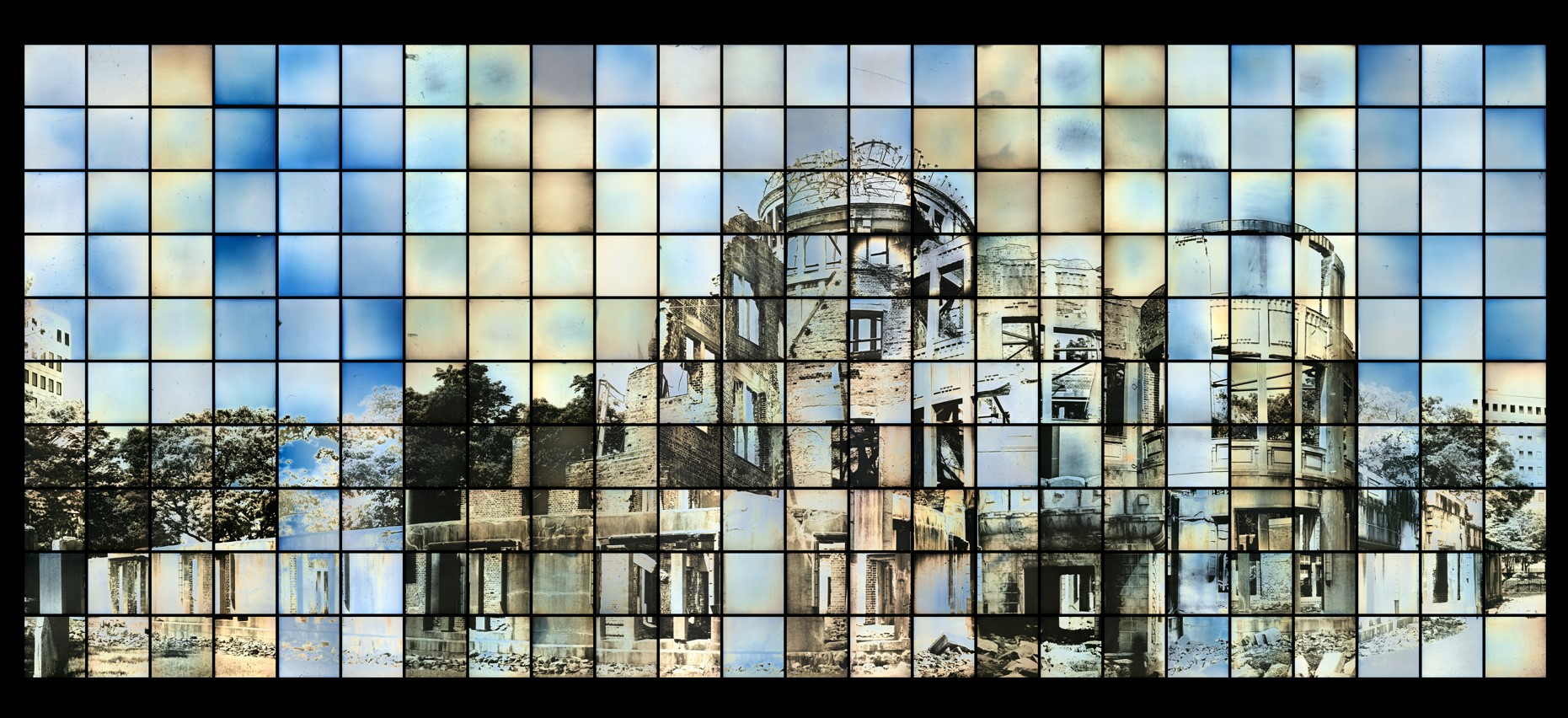
This exploration of nuclear histories involves circling around atomic monuments as though navigating the gravitational pull of the hypocentre – the point directly beneath or above a nuclear explosion – taking hundreds of six-by-six-centimetre daguerreotypes. For Arai, the hypocentre is a metaphor for invisibility and unreachability.

At school in Cold-War Japan, Arai heard f irsthand accounts from visiting hibakushas, survivors of Hiroshima or Nagasaki. His imagination of the nuclear apocalypse was also shaped by films and cartoons, often from Hollywood. The iconic mushroom cloud was rarely witnessed on the ground but was photographed from above by the very bombers that carried out the attack. In these ways, Japan’s visual memory of the bombings was shaped retrospectively, often through external perspectives.

This project challenges dominant historical representations and invites new ways of seeing.

Biography |
Arai’s work has been exhibited widely in Japan and internationally, including at Yokohama Museum of Art (2006); Timeless Gallery, Beijing (2011 and 2015); Mori Art Museum, Tokyo (2013); Museum of Fine Arts (MFA) Boston (2015); San Francisco Museum of Modern Art (SFMOMA) (2017); and Purdy Hicks Gallery, London (2020).

Arai’s awards have included the Source-Cord Prize, United Kingdom (2014); the 41st Kimura Ihei Photography Award, Japan (2016); and the short film category at the 72nd Salerno Film Festival, Italy (2018).

His work is in the collections of museums including the Smithsonian, Washington, D.C.; MFA Boston; SFMOMA; National Museum of Modern Art (MOMAT), Tokyo; Tokyo Metropolitan Museum of Photography; and Musée Guimet, Paris.

His monographs include Hyaku no Taiyō / Hyaku no Kagami – Syashin to Kioku no Migiwa (One Hundred Suns / One Hundred Mirrors – On the Shore of Photography and Memory), published by Iwanami Shoten (2023), and Monuments, published by PGI (2015).

About the Works and Artists
Takashi Arai

Born Kawasaki, Japan, 1978
Lives Berlin, Germany, and Kawasaki

Exposed in a Hundred Suns, 2011–ongoing
This exploration of nuclear histories involves circling around atomic monuments as though navigating the gravitational pull of the hypocentre – the point directly beneath or above a nuclear explosion – taking hundreds of six-by-six-centimetre daguerreotypes. For Arai, the hypocentre is a metaphor for invisibility and unreachability.

At school in Cold-War Japan, Arai heard f irsthand accounts from visiting hibakushas, survivors of Hiroshima or Nagasaki. His imagination of the nuclear apocalypse was also shaped by films and cartoons, often from Hollywood. The iconic mushroom cloud was rarely witnessed on the ground but was photographed from above by the very bombers that carried out the attack. In these ways, Japan’s visual memory of the bombings was shaped retrospectively, often through external perspectives.

This project challenges dominant historical representations and invites new ways of seeing.

Biography |
Arai’s work has been exhibited widely in Japan and internationally, including at Yokohama Museum of Art (2006); Timeless Gallery, Beijing (2011 and 2015); Mori Art Museum, Tokyo (2013); Museum of Fine Arts (MFA) Boston (2015); San Francisco Museum of Modern Art (SFMOMA) (2017); and Purdy Hicks Gallery, London (2020).

Arai’s awards have included the Source-Cord Prize, United Kingdom (2014); the 41st Kimura Ihei Photography Award, Japan (2016); and the short film category at the 72nd Salerno Film Festival, Italy (2018).

His work is in the collections of museums including the Smithsonian, Washington, D.C.; MFA Boston; SFMOMA; National Museum of Modern Art (MOMAT), Tokyo; Tokyo Metropolitan Museum of Photography; and Musée Guimet, Paris.

His monographs include Hyaku no Taiyō / Hyaku no Kagami – Syashin to Kioku no Migiwa (One Hundred Suns / One Hundred Mirrors – On the Shore of Photography and Memory), published by Iwanami Shoten (2023), and Monuments, published by PGI (2015).

Marina Caneve

Born Belluno, Italy, 1988
Lives Belluno
Are They Rocks or Clouds?, 2015–19
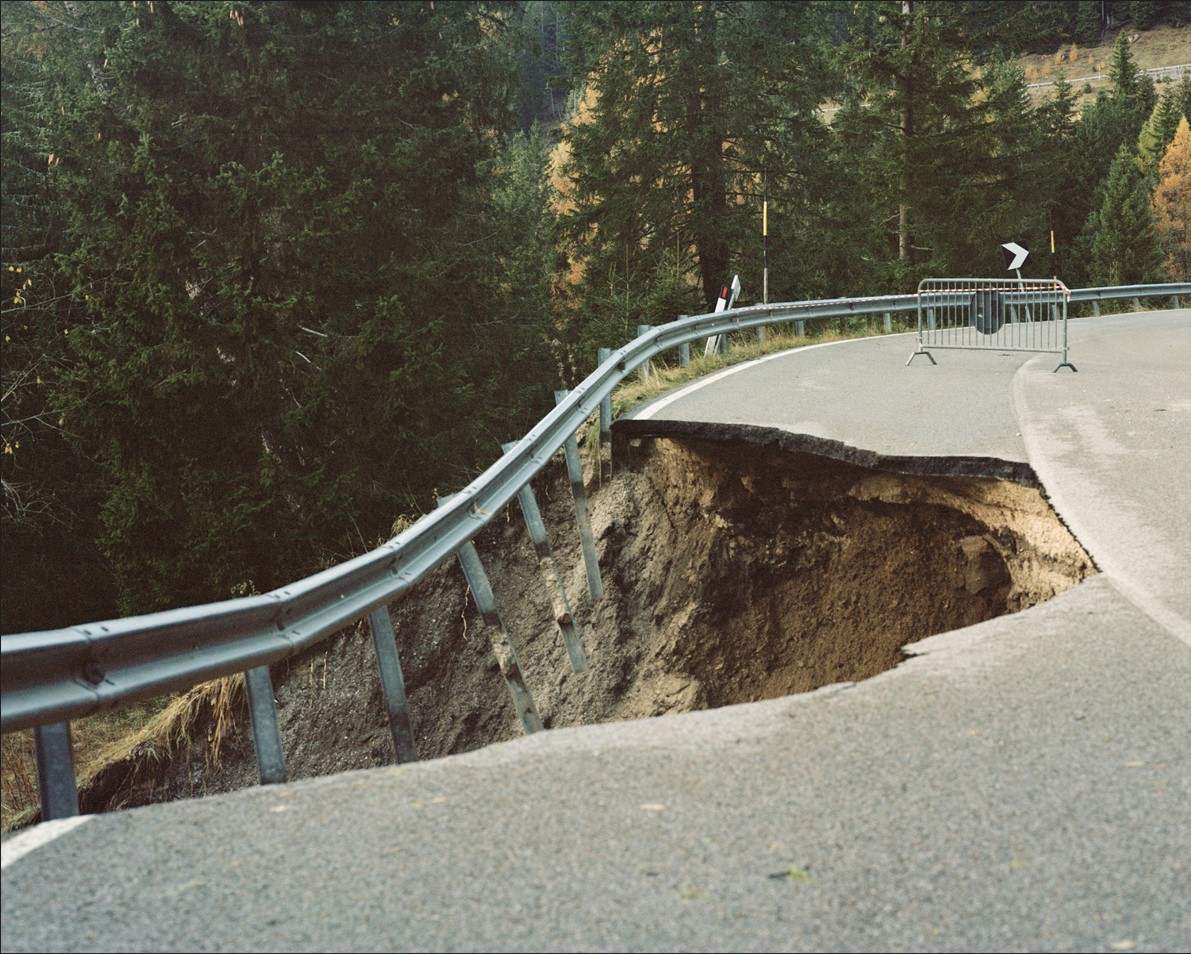
Photography usually documents an event that has already happened. This project instead is an attempt to foresee a future catastrophe, a repeat of the floods and landslides that devastated the Dolomites in northern Italy in 1966.

Caneve avoids revisiting the traditional sublime and monumental imagery of the mountain. She rather creates a new, uncertain imagery that allows us to explore, decode and re-observe the landscape. The series oscillates between the documentary and the poetic. Its variations are a metaphor for the stratification of the rocks that show the structure of mountains, revealing their geological epochs and their fragility, where at various points their slopes have collapsed.

The camera is directed towards the landscapes of Caneve’s childhood, towards the people who live in and with the mountains and who know their dangers. Seeing and imagining this vulnerability are a way of relating materially to it.

Biography |
Caneve’s work has been exhibited in institutions including Fotohof in Salzburg, Austria (2019); La Triennale, Milan (2021); and MAXXI, Rome (2021 and 2023). In 2023, Caneve received the Italian Council fellowship for On the Ground among the Animals, promoted by FMAV (Fondazione Modena Arti Visive, Italy) and UGM (Maribor Art Gallery, Slovenia).

Are They Rocks or Clouds? has won numerous awards including the Giovane Fotografia Italiana, now the Luigi Ghirri Award, and the Dummy Award at Cortona on the Move, Italy, both in 2018. It was published as a photobook by Fw:Books and won the Bastianelli Award for best Italian photobook in 2019. It was also nominated for the Prix du livre at Les Rencontres d’Arles, France in 2020.

Public and private collections that hold Caneve’s work include CAP Saint-Fons; MAXXI, Rome; MuFoCo, Milan; ICCD, Rome; and Fondazione Ago, Modena.

Her other major publications include On the Ground among the Animals, published by Fw:Books, selected for Best Dutch Book Designs in 2024; and CALAMITA/A, an investigation into the 1963 Vajont dam disaster in Italy. Caneve is co-founder of CALAMITA/À, an interdisciplinary platform focusing on catastrophes, awarded the Strategia Fotografia fellowship in 2023.
Marina Caneve

Born Belluno, Italy, 1988
Lives Belluno
Are They Rocks or Clouds?, 2015–19
Photography usually documents an event that has already happened. This project instead is an attempt to foresee a future catastrophe, a repeat of the floods and landslides that devastated the Dolomites in northern Italy in 1966.

Caneve avoids revisiting the traditional sublime and monumental imagery of the mountain. She rather creates a new, uncertain imagery that allows us to explore, decode and re-observe the landscape. The series oscillates between the documentary and the poetic. Its variations are a metaphor for the stratification of the rocks that show the structure of mountains, revealing their geological epochs and their fragility, where at various points their slopes have collapsed.

The camera is directed towards the landscapes of Caneve’s childhood, towards the people who live in and with the mountains and who know their dangers. Seeing and imagining this vulnerability are a way of relating materially to it.

Biography |
Caneve’s work has been exhibited in institutions including Fotohof in Salzburg, Austria (2019); La Triennale, Milan (2021); and MAXXI, Rome (2021 and 2023). In 2023, Caneve received the Italian Council fellowship for On the Ground among the Animals, promoted by FMAV (Fondazione Modena Arti Visive, Italy) and UGM (Maribor Art Gallery, Slovenia).

Are They Rocks or Clouds? has won numerous awards including the Giovane Fotografia Italiana, now the Luigi Ghirri Award, and the Dummy Award at Cortona on the Move, Italy, both in 2018. It was published as a photobook by Fw:Books and won the Bastianelli Award for best Italian photobook in 2019. It was also nominated for the Prix du livre at Les Rencontres d’Arles, France in 2020.

Public and private collections that hold Caneve’s work include CAP Saint-Fons; MAXXI, Rome; MuFoCo, Milan; ICCD, Rome; and Fondazione Ago, Modena.

Her other major publications include On the Ground among the Animals, published by Fw:Books, selected for Best Dutch Book Designs in 2024; and CALAMITA/A, an investigation into the 1963 Vajont dam disaster in Italy. Caneve is co-founder of CALAMITA/À, an interdisciplinary platform focusing on catastrophes, awarded the Strategia Fotografia fellowship in 2023.
Tom Fecht

Born Frankenberg, Germany, 1952
Lives Berlin, Germany, and Geneva, Switzerland

Luciferines – entre chien et loup
(Luciferines – Between Dog and Wolf),
2015–ongoing
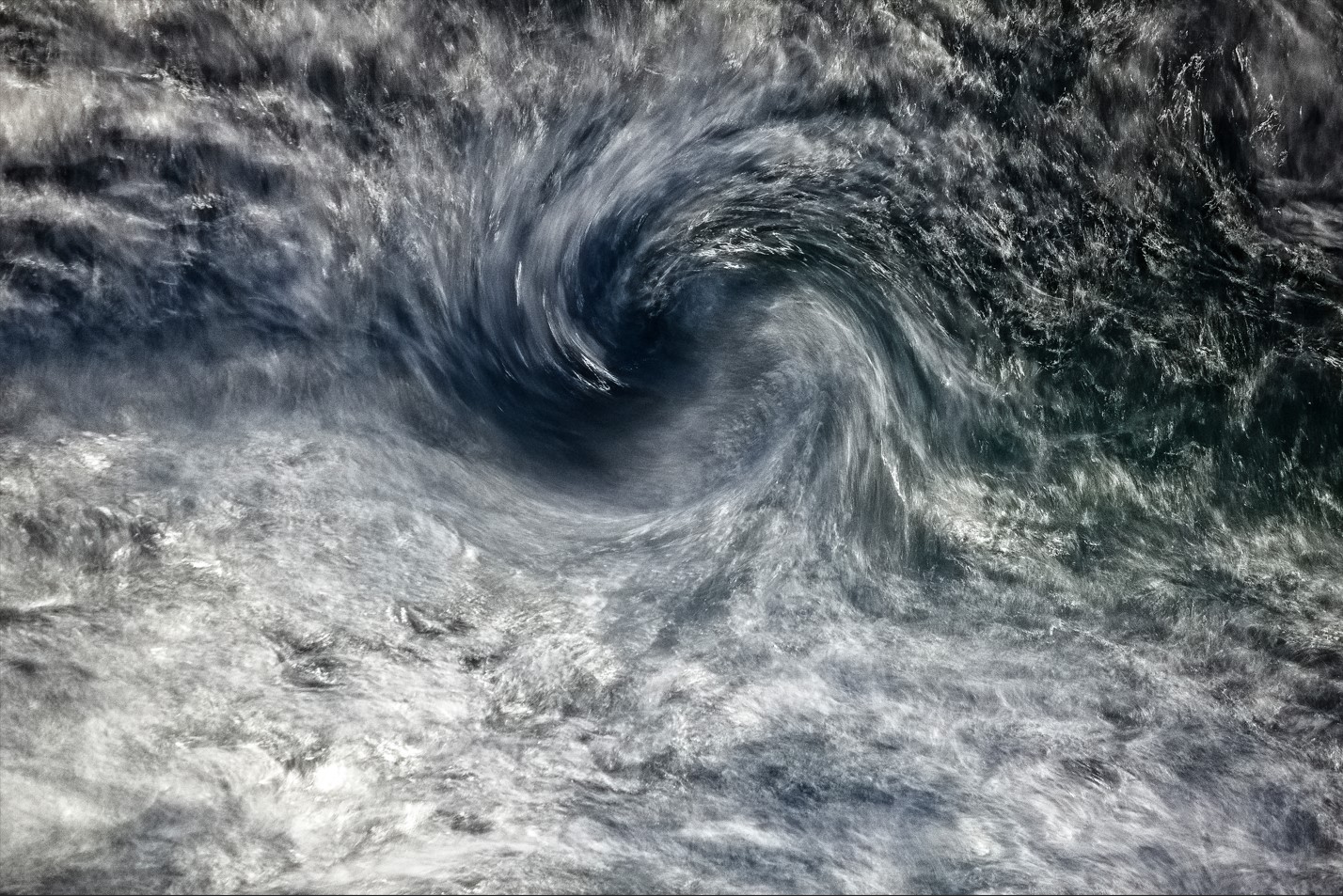
This series captures the rare phenomenon of bioluminescence, photographed on the wild Atlantic coast of Brittany. Luciferines are cold-water plankton endangered by rising ocean temperatures. Their electrical effects occur when millions are exposed to oxygen while reproducing on the turbulent surface of the sea. Their sublime traces remain almost invisible to the naked eye and can only be captured entre chien et loup, a magical twilight moment when the first blue rays of daylight intersect with the remaining reflections of the moon.

In times of global warming, uncertainty, hesitation and subconscious fear are mirrored in the shifting limits of liquid spaces. The coastline will always be a place of transformation and inconsistency.

Like the dying coral reefs, luciferines tell us of a time when an exhausted nature hits a dangerous point of no return. In a world on f ire, they simultaneously lead us to the magic of their beauty.

Biography |
Fecht’s work is held and has been exhibited at numerous public, corporate and private museums and collections internationally, including Documenta IX, Kassel, Germany (1992); Bundeskunsthalle, Bonn (1993); Hamburger Kunsthalle (1994); Nationalgalerie Berlin (1996); Martin-Gropius-Bau, Berlin (2001); MUCEM, Marseille (2003); Royal College of Art, London (2007); Museum Folkwang, Essen, Germany (2010); LAAC Musée des Beaux-Arts de Dunkerque, France (2014); Museum DKM, Duisburg, Germany (2017); New York Public Library (2019), and CERN, Geneva (2023).

Fecht has taught at Cornell University, New York, in London at the Royal College of Art and Imperial College, and at ETH Zurich.
Tom Fecht

Born Frankenberg, Germany, 1952
Lives Berlin, Germany, and Geneva, Switzerland

Luciferines – entre chien et loup
(Luciferines – Between Dog and Wolf),
2015–ongoing
This series captures the rare phenomenon of bioluminescence, photographed on the wild Atlantic coast of Brittany. Luciferines are cold-water plankton endangered by rising ocean temperatures. Their electrical effects occur when millions are exposed to oxygen while reproducing on the turbulent surface of the sea. Their sublime traces remain almost invisible to the naked eye and can only be captured entre chien et loup, a magical twilight moment when the first blue rays of daylight intersect with the remaining reflections of the moon.

In times of global warming, uncertainty, hesitation and subconscious fear are mirrored in the shifting limits of liquid spaces. The coastline will always be a place of transformation and inconsistency.

Like the dying coral reefs, luciferines tell us of a time when an exhausted nature hits a dangerous point of no return. In a world on f ire, they simultaneously lead us to the magic of their beauty.

Biography |
Fecht’s work is held and has been exhibited at numerous public, corporate and private museums and collections internationally, including Documenta IX, Kassel, Germany (1992); Bundeskunsthalle, Bonn (1993); Hamburger Kunsthalle (1994); Nationalgalerie Berlin (1996); Martin-Gropius-Bau, Berlin (2001); MUCEM, Marseille (2003); Royal College of Art, London (2007); Museum Folkwang, Essen, Germany (2010); LAAC Musée des Beaux-Arts de Dunkerque, France (2014); Museum DKM, Duisburg, Germany (2017); New York Public Library (2019), and CERN, Geneva (2023).

Fecht has taught at Cornell University, New York, in London at the Royal College of Art and Imperial College, and at ETH Zurich.
Balazs Gardi

Born Budapest, Hungary, 1975
Lives Oakland, California

The Storm, 2020–21
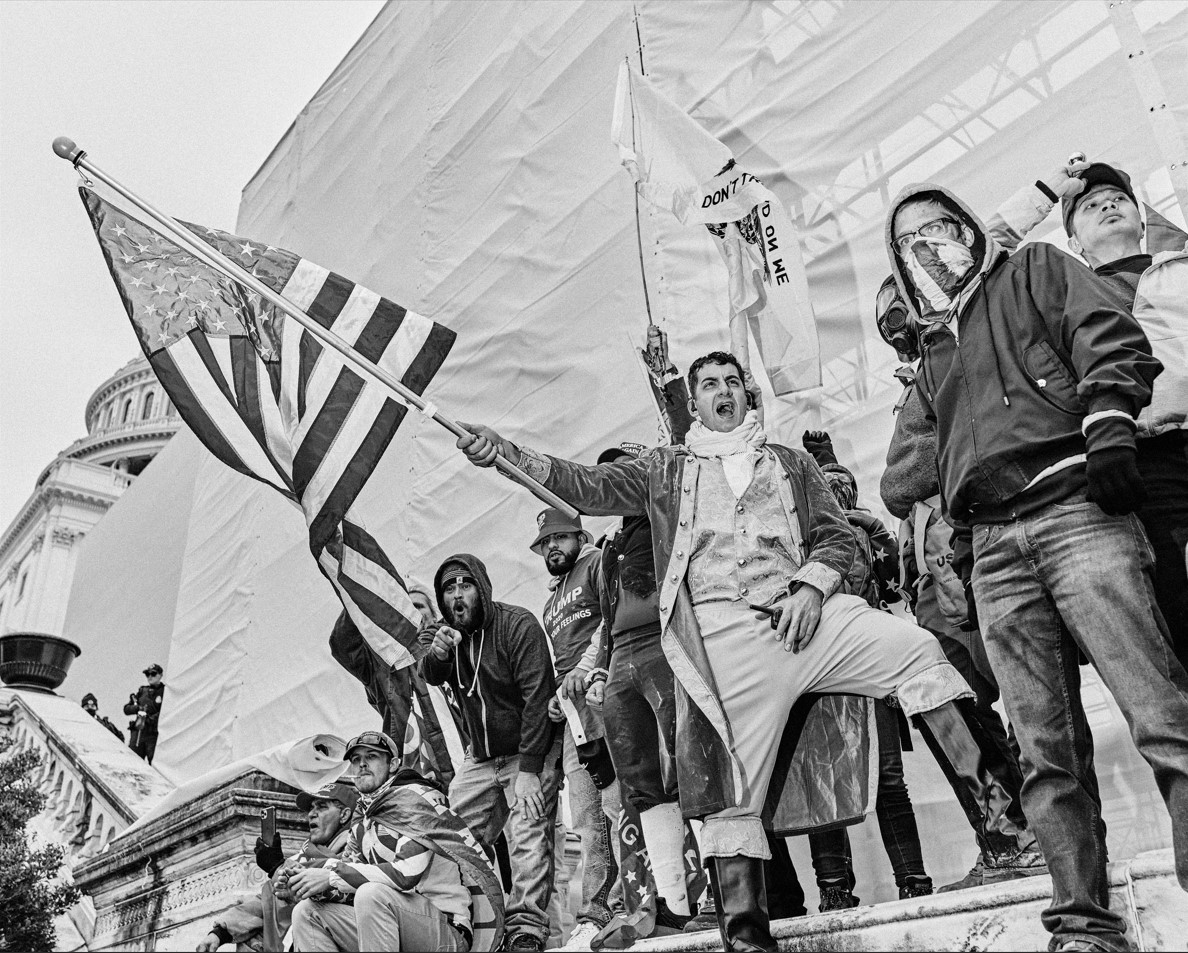
For Gardi, the aftermath of the 2020 United States presidential election had the feel of a gathering storm. On 6 January 2021, navigating fumes and rubber bullets while chronicling the attack on the US Capitol Building, he felt the storm had arrived and wondered how this outburst would alter America’s founding principles.

As a young photographer in his native Hungary, Gardi had witnessed how malicious propaganda helped morph a recently liberated Soviet client state into a kleptocracy. The Storm warns us how easily a privileged society could slide into an Orwellian dystopia.

Gardi gathered these photographs to alert future viewers to the prospect that what he witnessed can happen anywhere. As he says, ‘The storm is here.’

Biography |
Gardi began his career as a photojournalist after studying photography in his native Hungary, and at Cardiff University’s School of Journalism in the United Kingdom.

He is known for creating long-form immersive projects that explore the tension between people and their environment. He seeks to highlight the grotesque conflict and surprising beauty that human activity often produces. Gardi devoted more than two decades to capturing the landscape of the war in Afghanistan and has travelled to dozens of countries to survey the far reaching consequences of the global water crisis.

Solo exhibitions of Gardi’s work include the European Parliament, Brussels (2005); DokuFoto, Prizren, Kosovo (2007 and 2008); The New York Photo Festival (2011); and Roca Gallery, Barcelona (2015). He has also participated in group exhibitions at venues including Museum of Fine Arts, Budapest (2008); Les Invalides, Paris (2009); The Annenberg Space for Photography, Los Angeles (2009); The Museum of Fine Arts, Houston, Texas (2012); and Saatchi Gallery, London (2022).

Gardi has received grants and fellowships from the Alexia Foundation, INK, Magnum Foundation, Reuters Foundation and Getty Images. He is the recipient of the Bayeux Calvados Award for War Correspondents in 2008; the Global Vision Award at Pictures of the Year International in 2009; and three first prizes at World Press Photo.
Balazs Gardi

Born Budapest, Hungary, 1975
Lives Oakland, California

The Storm, 2020–21
For Gardi, the aftermath of the 2020 United States presidential election had the feel of a gathering storm. On 6 January 2021, navigating fumes and rubber bullets while chronicling the attack on the US Capitol Building, he felt the storm had arrived and wondered how this outburst would alter America’s founding principles.

As a young photographer in his native Hungary, Gardi had witnessed how malicious propaganda helped morph a recently liberated Soviet client state into a kleptocracy. The Storm warns us how easily a privileged society could slide into an Orwellian dystopia.

Gardi gathered these photographs to alert future viewers to the prospect that what he witnessed can happen anywhere. As he says, ‘The storm is here.’

Biography |
Gardi began his career as a photojournalist after studying photography in his native Hungary, and at Cardiff University’s School of Journalism in the United Kingdom.

He is known for creating long-form immersive projects that explore the tension between people and their environment. He seeks to highlight the grotesque conflict and surprising beauty that human activity often produces. Gardi devoted more than two decades to capturing the landscape of the war in Afghanistan and has travelled to dozens of countries to survey the far reaching consequences of the global water crisis.

Solo exhibitions of Gardi’s work include the European Parliament, Brussels (2005); DokuFoto, Prizren, Kosovo (2007 and 2008); The New York Photo Festival (2011); and Roca Gallery, Barcelona (2015). He has also participated in group exhibitions at venues including Museum of Fine Arts, Budapest (2008); Les Invalides, Paris (2009); The Annenberg Space for Photography, Los Angeles (2009); The Museum of Fine Arts, Houston, Texas (2012); and Saatchi Gallery, London (2022).

Gardi has received grants and fellowships from the Alexia Foundation, INK, Magnum Foundation, Reuters Foundation and Getty Images. He is the recipient of the Bayeux Calvados Award for War Correspondents in 2008; the Global Vision Award at Pictures of the Year International in 2009; and three first prizes at World Press Photo.
Roberto Huarcaya

Born Lima, Peru, 1959
Lives Lima

Amazogramas, 2014
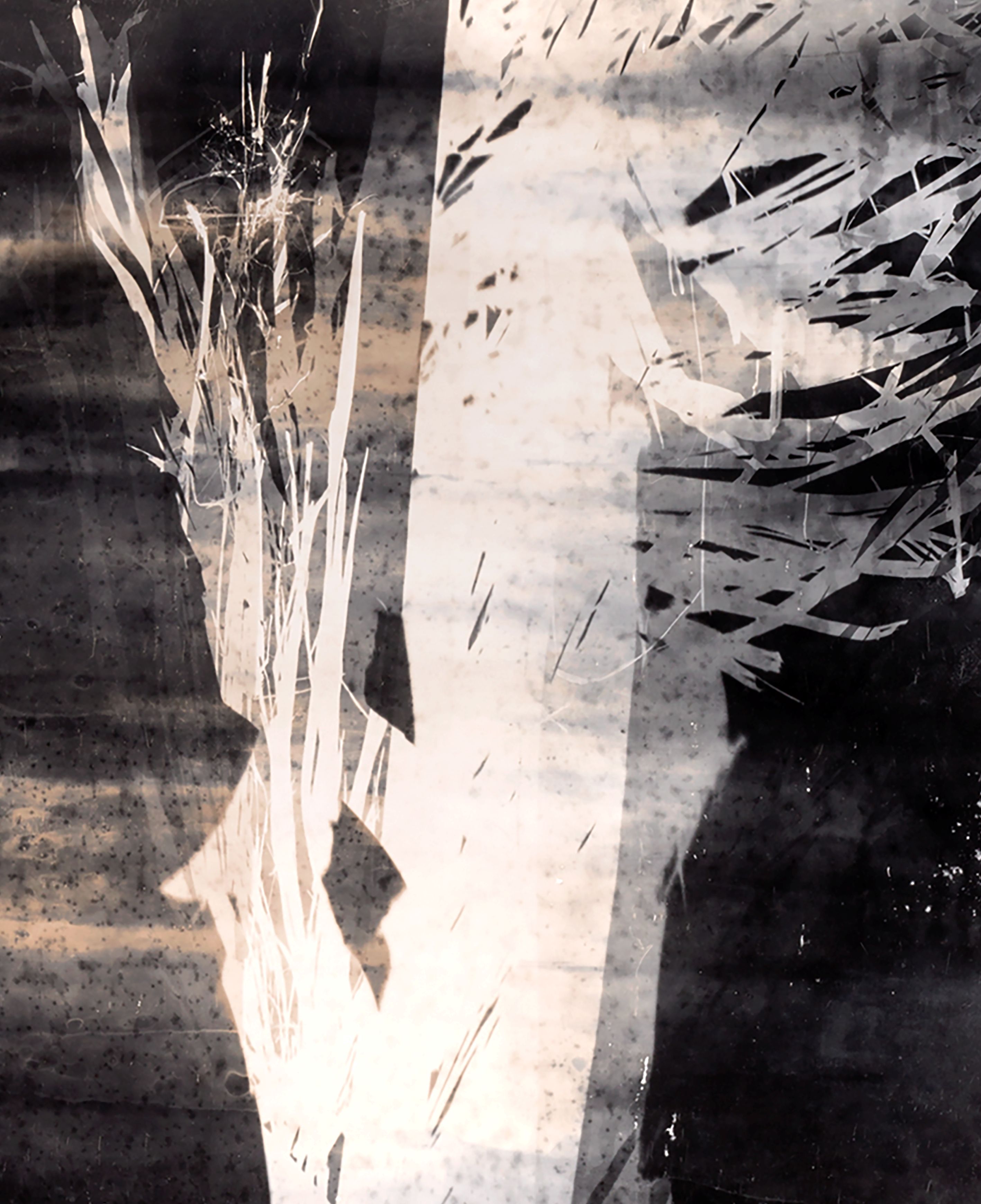
A storm discharges accumulated energy, not as mere destruction, but as a force seeking to restore balance. This image captures that essence: a thirty-metre-long frame of an Amazonian palm lying on the bed of the Madre de Dios River.

While Huarcaya and his team were exposing a thirty-metre roll of photosensitive paper placed beneath the tree, a storm erupted. Four flashes of lightning imprinted their energy onto the scene and onto the paper. Nature took control.

Would they accept the exposure had been lost or recognise that, after more than two years of seeking to capture visually the power and vitality of the Amazon, they had found the key? They had to work with the Amazon, not despite it.

Biography |
Huarcaya has participated in numerous solo and group exhibitions, biennials and fairs including the 6th Havana Biennial (1997); PHotoESPAÑA, Madrid (1999 and 2025); the Venice Biennale (2001 and 2024); CoCA (Center on Contemporary Art), Seattle, Washington (2007); and the Daegu Photo Biennale in South Korea (2014).

More recently, his work has been exhibited at ARCOlisboa in Portugal (2017) and ARCO Madrid (2019 and 2025). Other venues have included Paris Photo (2019, 2023 and 2024); The Armory Show in New York (2022); Les Rencontres d’Arles, France (2023); Art Basel Miami (2024); Donggang International Photo, South Korea (2024); and Photo London (2024 and 2025).

In Lima, Huarcaya taught photography at the Universidad de Lima (1990–93), the Gaudi Institute (1993–97) and the Centro de la Fotografía, now Centro de la Imagen, where he was founder and director from 1999 to July 2022.
Roberto Huarcaya

Born Lima, Peru, 1959
Lives Lima

Amazogramas, 2014
A storm discharges accumulated energy, not as mere destruction, but as a force seeking to restore balance. This image captures that essence: a thirty-metre-long frame of an Amazonian palm lying on the bed of the Madre de Dios River.

While Huarcaya and his team were exposing a thirty-metre roll of photosensitive paper placed beneath the tree, a storm erupted. Four flashes of lightning imprinted their energy onto the scene and onto the paper. Nature took control.

Would they accept the exposure had been lost or recognise that, after more than two years of seeking to capture visually the power and vitality of the Amazon, they had found the key? They had to work with the Amazon, not despite it.

Biography |
Huarcaya has participated in numerous solo and group exhibitions, biennials and fairs including the 6th Havana Biennial (1997); PHotoESPAÑA, Madrid (1999 and 2025); the Venice Biennale (2001 and 2024); CoCA (Center on Contemporary Art), Seattle, Washington (2007); and the Daegu Photo Biennale in South Korea (2014).

More recently, his work has been exhibited at ARCOlisboa in Portugal (2017) and ARCO Madrid (2019 and 2025). Other venues have included Paris Photo (2019, 2023 and 2024); The Armory Show in New York (2022); Les Rencontres d’Arles, France (2023); Art Basel Miami (2024); Donggang International Photo, South Korea (2024); and Photo London (2024 and 2025).

In Lima, Huarcaya taught photography at the Universidad de Lima (1990–93), the Gaudi Institute (1993–97) and the Centro de la Fotografía, now Centro de la Imagen, where he was founder and director from 1999 to July 2022.
Alfredo Jaar

Born Santiago, Chile, 1956
Lives New York City

The End, 2025
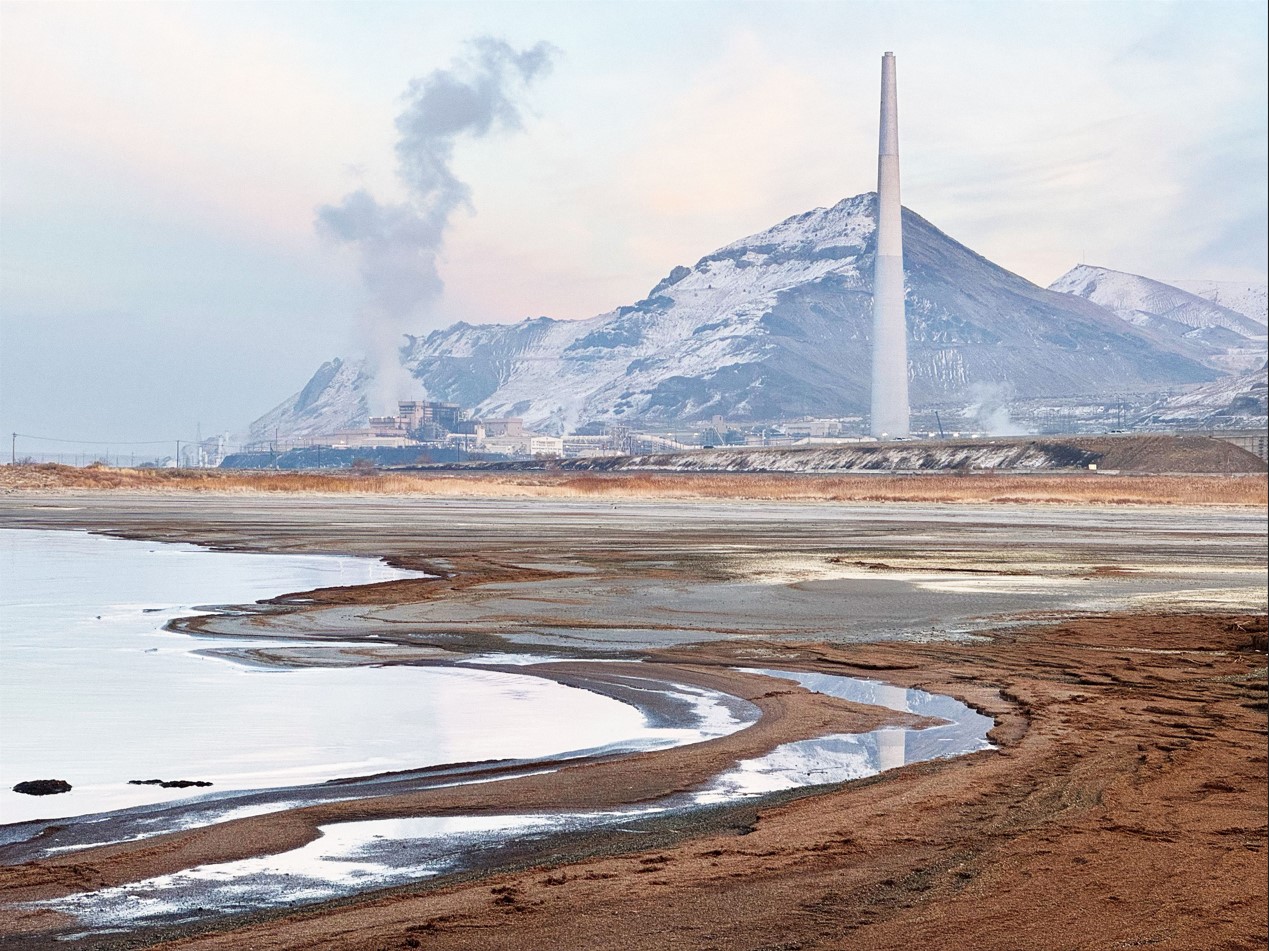
The End focuses on the Great Salt Lake in Utah, described by scientists as an ‘environmental nuclear bomb’. It is a keystone ecosystem for the western hemisphere but has lost 73% of its water since the mid nineteenth century, exposing toxic dust and driving salinity dangerously high.

Without a dramatic increase in water flow, the lake risks disappearing, devastating Utah’s public health, economy and environment. The lake and its wetlands sustain rainfall and provide a habitat for ten million migratory birds.

This unfolding disaster may be past the point of no return, a potential tragedy of incalculable magnitude and a sign of things to come. Jaar’s objective was to show the fate of the lake while revealing its beauty and potential. In counterpoint to the scale of the disaster, Jaar printed these images in a small, unspectacular format as a visual whisper, a lament for our dying planet.

Biography |
Jaar participated in the Venice Biennale (1986, 2007, 2009 and 2013) and the Bienal de São Paulo, Brazil (1987, 1989, 2010 and 2021), as well as Documenta in Kassel, Germany (1987 and 2002).

Solo exhibitions of his work have been held at the Musée cantonal des Beaux-Arts, Lausanne (2007); Alte Nationalgalerie, Berlinische Galerie and Neue Gesellschaft für bildende Kunst, all in Berlin (2012); Les Rencontres d’Arles, France (2013); Yorkshire Sculpture Park, United Kingdom (2017); Zeitz MOCAA, Cape Town (2020); SESC Pompéia, São Paulo (2021); and Hiroshima City Museum of Contemporary Art (2023).

Jaar has received numerous awards including the Hiroshima Art Prize in 2018 and the Hasselblad Award in Sweden in 2020. In 2024, he was awarded the IV Mediterranean Albert Camus Prize in Spain and this year has won the Edward MacDowell Medal in Peterborough, New Hampshire.

His work can be found in dozens of public and private collections, including The Museum of Modern Art and the Guggenheim Museum, New York; Museu de Arte de São Paulo; Tate, London; Centre Georges Pompidou, Paris; M+, Hong Kong; and Tokushima Modern Art Museum, Japan. He became a Guggenheim Fellow in 1985 and a MacArthur Fellow in 2000, both in the United States.
Alfredo Jaar

Born Santiago, Chile, 1956
Lives New York City

The End, 2025
The End focuses on the Great Salt Lake in Utah, described by scientists as an ‘environmental nuclear bomb’. It is a keystone ecosystem for the western hemisphere but has lost 73% of its water since the mid nineteenth century, exposing toxic dust and driving salinity dangerously high.

Without a dramatic increase in water flow, the lake risks disappearing, devastating Utah’s public health, economy and environment. The lake and its wetlands sustain rainfall and provide a habitat for ten million migratory birds.

This unfolding disaster may be past the point of no return, a potential tragedy of incalculable magnitude and a sign of things to come. Jaar’s objective was to show the fate of the lake while revealing its beauty and potential. In counterpoint to the scale of the disaster, Jaar printed these images in a small, unspectacular format as a visual whisper, a lament for our dying planet.

Biography |
Jaar participated in the Venice Biennale (1986, 2007, 2009 and 2013) and the Bienal de São Paulo, Brazil (1987, 1989, 2010 and 2021), as well as Documenta in Kassel, Germany (1987 and 2002).

Solo exhibitions of his work have been held at the Musée cantonal des Beaux-Arts, Lausanne (2007); Alte Nationalgalerie, Berlinische Galerie and Neue Gesellschaft für bildende Kunst, all in Berlin (2012); Les Rencontres d’Arles, France (2013); Yorkshire Sculpture Park, United Kingdom (2017); Zeitz MOCAA, Cape Town (2020); SESC Pompéia, São Paulo (2021); and Hiroshima City Museum of Contemporary Art (2023).

Jaar has received numerous awards including the Hiroshima Art Prize in 2018 and the Hasselblad Award in Sweden in 2020. In 2024, he was awarded the IV Mediterranean Albert Camus Prize in Spain and this year has won the Edward MacDowell Medal in Peterborough, New Hampshire.

His work can be found in dozens of public and private collections, including The Museum of Modern Art and the Guggenheim Museum, New York; Museu de Arte de São Paulo; Tate, London; Centre Georges Pompidou, Paris; M+, Hong Kong; and Tokushima Modern Art Museum, Japan. He became a Guggenheim Fellow in 1985 and a MacArthur Fellow in 2000, both in the United States.
Belal Khaled

Born Khan Younis, Palestine, 1992
Lives Doha, Qatar

Hands Tell Stories, 2023–24
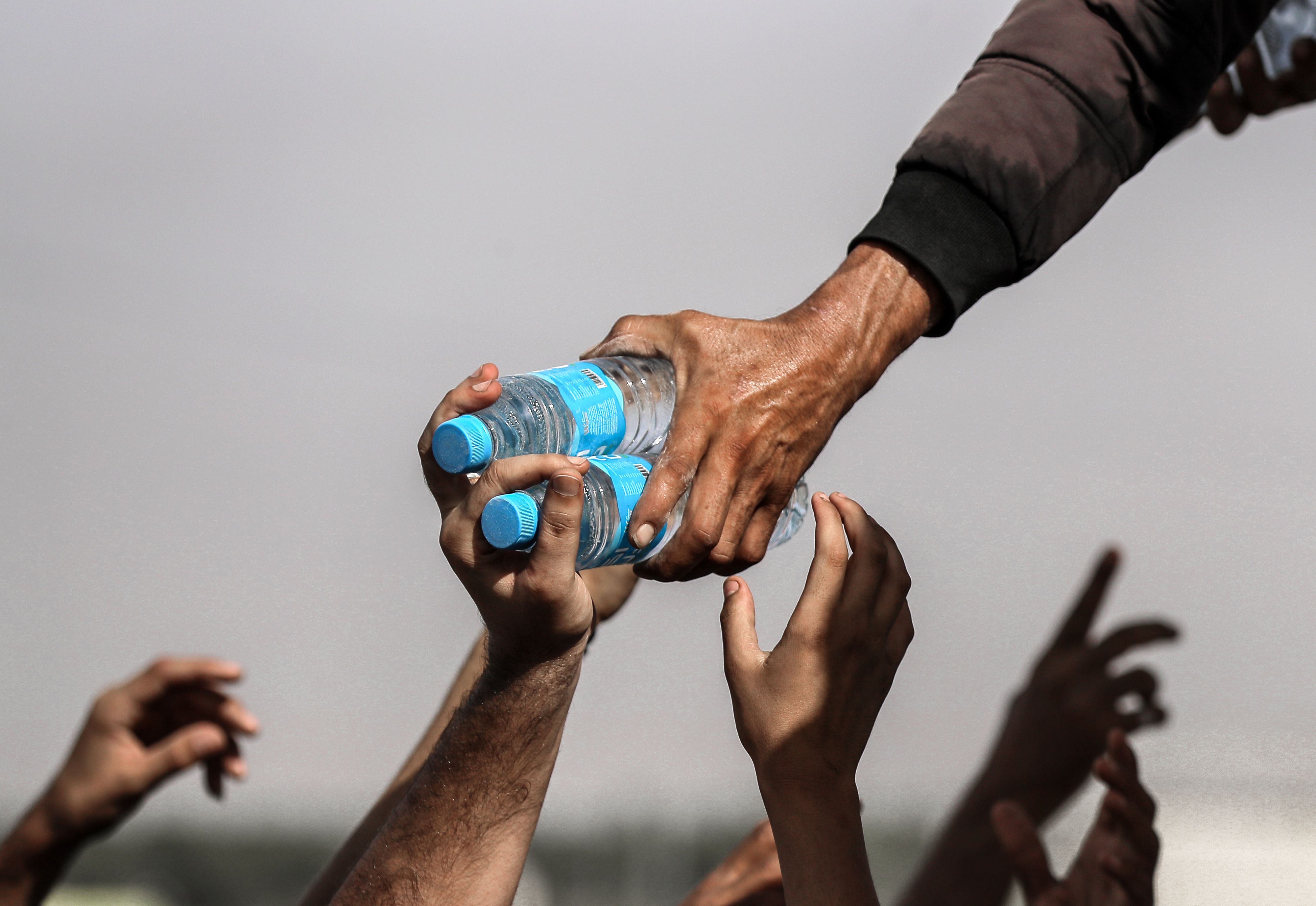
After his home was destroyed during the war in Gaza, Khaled was staying in a tent outside the morgue at Nasser Hospital. The tent overlooked an area where bodies were being gathered after the morgue reached full capacity.

Surrounded by the smell of death and the sound of drones, Khaled began documenting hands. Through their scars, their stillness, their grip on life, they told stories no voice could carry. He documented the hand that was a father’s last touch with his son, the hand that searched desperately for survivors beneath the rubble, and the hand that offered joy despite overwhelming pain, as well as those that are now still forever.

The images tell a collective narrative through individual details, making the hand a visual anchor for understanding reality. Each hand carries a meaning of survival, absence and the fragile persistence of life. And each hand, like each story, is unlike any other.

Biography |
Khaled’s work has been exhibited in more than a dozen countries, including at the Faces of Gaza exhibition, Nancy, France (2014); P21 Gallery, London (2014); the D’Reesha Arts Festival, Doha (2022); and Palestine Museum US in Woodbridge, Connecticut (2024).

UNESCO showcased his art at its Paris headquarters to celebrate World Arabic Language Day in 2021, and Google displayed some of his work at the entrance to its offices in Paris in 2023. He has appeared as a speaker on TED Arabic, and his work has been published internationally, including in Time, The Guardian and The Wall Street Journal and on Al Jazeera.
Belal Khaled

Born Khan Younis, Palestine, 1992
Lives Doha, Qatar

Hands Tell Stories, 2023–24
After his home was destroyed during the war in Gaza, Khaled was staying in a tent outside the morgue at Nasser Hospital. The tent overlooked an area where bodies were being gathered after the morgue reached full capacity.

Surrounded by the smell of death and the sound of drones, Khaled began documenting hands. Through their scars, their stillness, their grip on life, they told stories no voice could carry. He documented the hand that was a father’s last touch with his son, the hand that searched desperately for survivors beneath the rubble, and the hand that offered joy despite overwhelming pain, as well as those that are now still forever.

The images tell a collective narrative through individual details, making the hand a visual anchor for understanding reality. Each hand carries a meaning of survival, absence and the fragile persistence of life. And each hand, like each story, is unlike any other.

Biography |
Khaled’s work has been exhibited in more than a dozen countries, including at the Faces of Gaza exhibition, Nancy, France (2014); P21 Gallery, London (2014); the D’Reesha Arts Festival, Doha (2022); and Palestine Museum US in Woodbridge, Connecticut (2024).

UNESCO showcased his art at its Paris headquarters to celebrate World Arabic Language Day in 2021, and Google displayed some of his work at the entrance to its offices in Paris in 2023. He has appeared as a speaker on TED Arabic, and his work has been published internationally, including in Time, The Guardian and The Wall Street Journal and on Al Jazeera.
Hannah Modigh

Born Stockholm, Sweden, 1980
Lives Stockholm

Hurricane Season, 2012
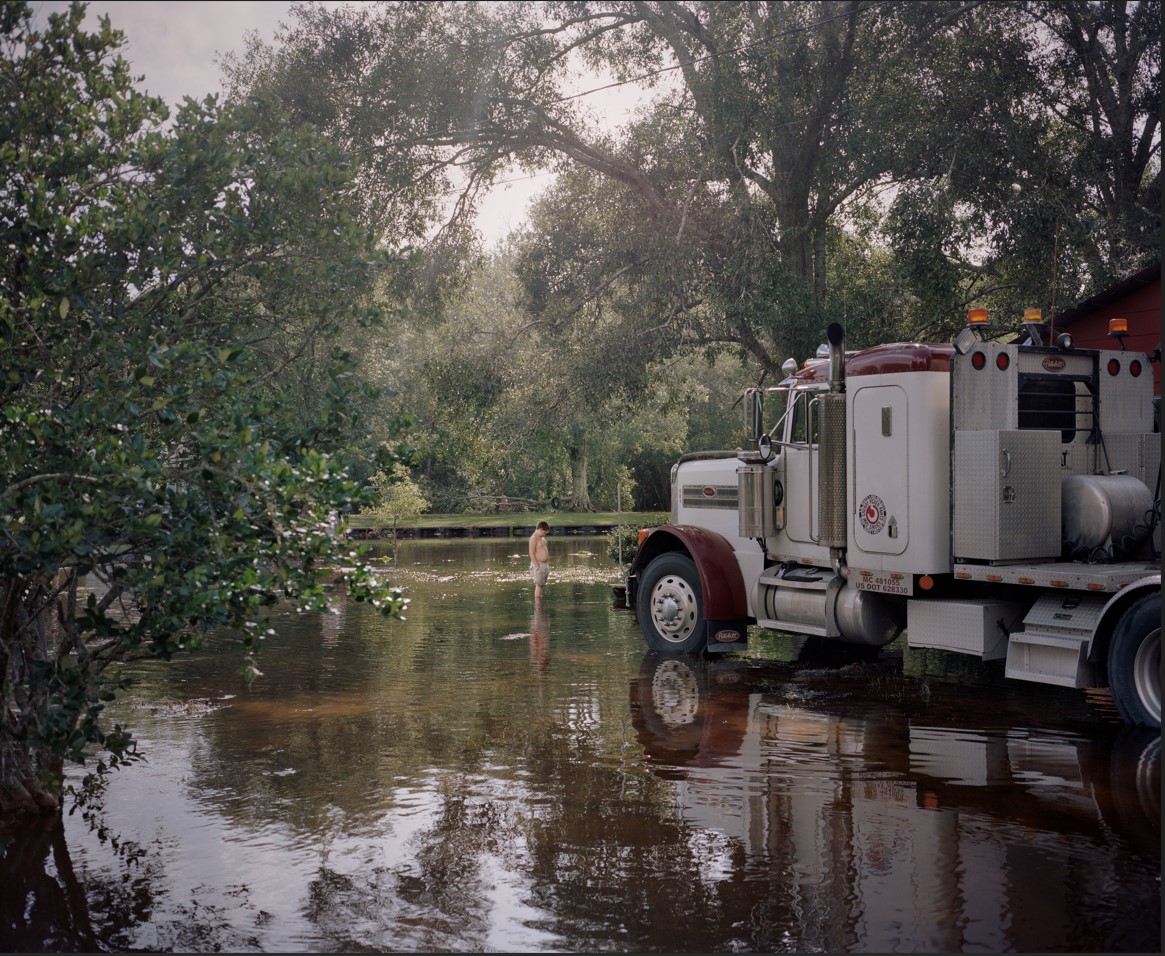
In southern Louisiana, the threat of hurricanes arrives annually, but the storm around some people is felt daily. Memories that never have time to heal are repressed. It’s quiet now, but uncertainty, fear and anger lurk beneath the surface.

Modigh was initially interested in exploring Louisiana’s high crime rates and history of violence. She eventually perceived parallels between fears of hurricanes and undertones of aggression in society. Fear and anxiety are natural reactions to feelings of threat, but in a context where weakness is undesirable, even dangerous, there is an advantage in transforming fear into action and anger.

Hurricane Season is a metaphor for an atmosphere of living on the verge of eruption, with a sense that something is still lurking in the calm. It is about the mental state of being between disasters.


Biography |
Modigh’s work has been shown in numerous exhibitions internationally, including at Deichtorhallen, Hamburg (2012); Landskrona Photo Festival, Sweden (2013); Münchner Stadtmuseum, Munich (2013); Sune Jonsson Centrum för Dokumentärfotografi, Umeå, Sweden (2018); DIPE (Dali International Photography Exhibition), Yunnan, China (2019); Gallery of Photography, Dublin (2020); House of Culture, Stockholm (2022); and Les Rencontres d’Arles, France (2023).

Her long-term project Hillbilly Heroin, Honey was exhibited in several museums in Sweden, Denmark and Finland and in 2010 won the Swedish Photo Book Prize. Her series have also been awarded the European Photo Exhibition Award in 2011, the Lars Tunbjörk prize in Sweden in 2017 and this year’s Lennart af Petersens prize, also in Sweden. Her work is held in collections including Moderna Museet in Stockholm. The most recent of Modigh’s eight photobooks is Searching for Sivagami, published by Kultbooks in 2024.
Hannah Modigh

Born Stockholm, Sweden, 1980
Lives Stockholm

Hurricane Season, 2012
In southern Louisiana, the threat of hurricanes arrives annually, but the storm around some people is felt daily. Memories that never have time to heal are repressed. It’s quiet now, but uncertainty, fear and anger lurk beneath the surface.

Modigh was initially interested in exploring Louisiana’s high crime rates and history of violence. She eventually perceived parallels between fears of hurricanes and undertones of aggression in society. Fear and anxiety are natural reactions to feelings of threat, but in a context where weakness is undesirable, even dangerous, there is an advantage in transforming fear into action and anger.

Hurricane Season is a metaphor for an atmosphere of living on the verge of eruption, with a sense that something is still lurking in the calm. It is about the mental state of being between disasters.


Biography |
Modigh’s work has been shown in numerous exhibitions internationally, including at Deichtorhallen, Hamburg (2012); Landskrona Photo Festival, Sweden (2013); Münchner Stadtmuseum, Munich (2013); Sune Jonsson Centrum för Dokumentärfotografi, Umeå, Sweden (2018); DIPE (Dali International Photography Exhibition), Yunnan, China (2019); Gallery of Photography, Dublin (2020); House of Culture, Stockholm (2022); and Les Rencontres d’Arles, France (2023).

Her long-term project Hillbilly Heroin, Honey was exhibited in several museums in Sweden, Denmark and Finland and in 2010 won the Swedish Photo Book Prize. Her series have also been awarded the European Photo Exhibition Award in 2011, the Lars Tunbjörk prize in Sweden in 2017 and this year’s Lennart af Petersens prize, also in Sweden. Her work is held in collections including Moderna Museet in Stockholm. The most recent of Modigh’s eight photobooks is Searching for Sivagami, published by Kultbooks in 2024.
Baudouin Mouanda

Born Ouésso, Congo-Brazzaville, 1981
Lives Brazzaville, Congo-Brazzaville

Ciel de saison (Seasonal Sky), 2020
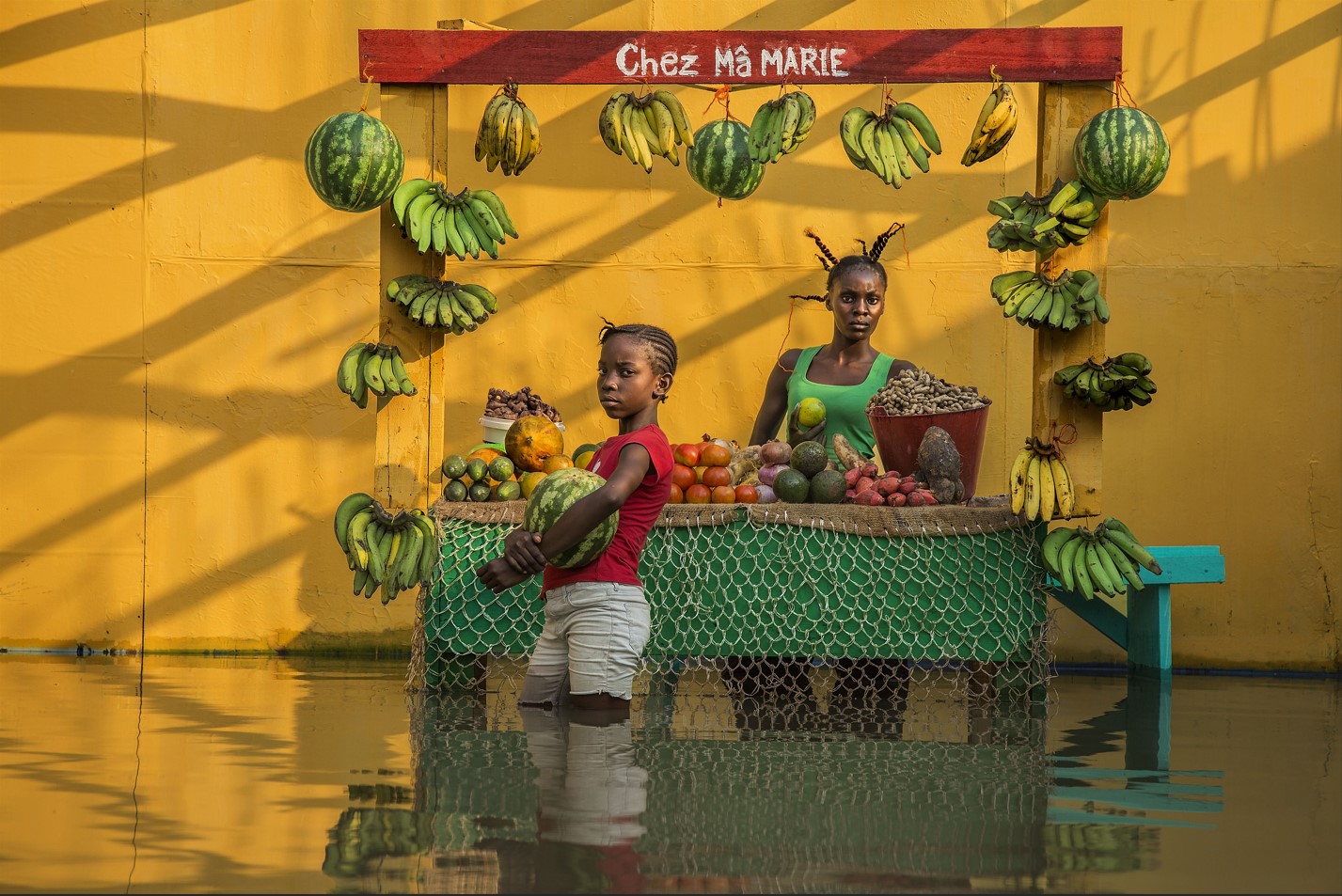
These photographs are based on real events during floods in Brazzaville, Congo-Brazzaville, during the 2020 COVID lockdown. They are a reminder of the need to respect the environment or face reprisals from nature. The seasons have changed, the threat from the rain is permanent.

When thunder arrives at night, no one stays indoors, everyone is keeping watch on the sky. They find a shovel, a saucepan or a bucket to clear the sand and water, they try to create a dam against the torrent. For the elderly, the effort seems futile. They abandon their homes, pointing at the sky saying, ‘God alone knows.’

During the floods, it was impossible to get into inundated streets. Mouanda instead gathered personal testimonies to reconstruct the desolation later. Residents brought their belongings and posed in a flooded basement to recreate the situations they faced.

Biography |
Work by Mouanda has been exhibited at numerous solo and group exhibitions internationally, including at Gasworks, London (2011); MIA Gallery, Seattle, Washington (2013) and the Breda International Photo Festival, Netherlands (2016).

He has won numerous prizes, including the Central Africa category in the 2011 African Beauty in All Its States Award, presented by the African Union and the European Union; and the Prix Roger-Pic, Paris, in 2022.

He works regularly with news publications including Jeune Afrique, Planète jeune, Afrique Magazine, Le Monde, L’Express styles, VSD and L’Humanité. Mouanda is co-founder of the Brazzaville-based community photography collective Génération Elili.

He is also working on a project to build a new photography centre called ClassPro Culture to serve communities in outlying areas that lack cultural facilities. It is due to open at the start of the school year.
Baudouin Mouanda

Born Ouésso, Congo-Brazzaville, 1981
Lives Brazzaville, Congo-Brazzaville

Ciel de saison (Seasonal Sky), 2020
These photographs are based on real events during floods in Brazzaville, Congo-Brazzaville, during the 2020 COVID lockdown. They are a reminder of the need to respect the environment or face reprisals from nature. The seasons have changed, the threat from the rain is permanent.

When thunder arrives at night, no one stays indoors, everyone is keeping watch on the sky. They find a shovel, a saucepan or a bucket to clear the sand and water, they try to create a dam against the torrent. For the elderly, the effort seems futile. They abandon their homes, pointing at the sky saying, ‘God alone knows.’

During the floods, it was impossible to get into inundated streets. Mouanda instead gathered personal testimonies to reconstruct the desolation later. Residents brought their belongings and posed in a flooded basement to recreate the situations they faced.

Biography |
Work by Mouanda has been exhibited at numerous solo and group exhibitions internationally, including at Gasworks, London (2011); MIA Gallery, Seattle, Washington (2013) and the Breda International Photo Festival, Netherlands (2016).

He has won numerous prizes, including the Central Africa category in the 2011 African Beauty in All Its States Award, presented by the African Union and the European Union; and the Prix Roger-Pic, Paris, in 2022.

He works regularly with news publications including Jeune Afrique, Planète jeune, Afrique Magazine, Le Monde, L’Express styles, VSD and L’Humanité. Mouanda is co-founder of the Brazzaville-based community photography collective Génération Elili.

He is also working on a project to build a new photography centre called ClassPro Culture to serve communities in outlying areas that lack cultural facilities. It is due to open at the start of the school year.
Camille Seaman

Born Huntington, New York, 1969
Lives Ølgod, Denmark

The Big Cloud, 2008–14
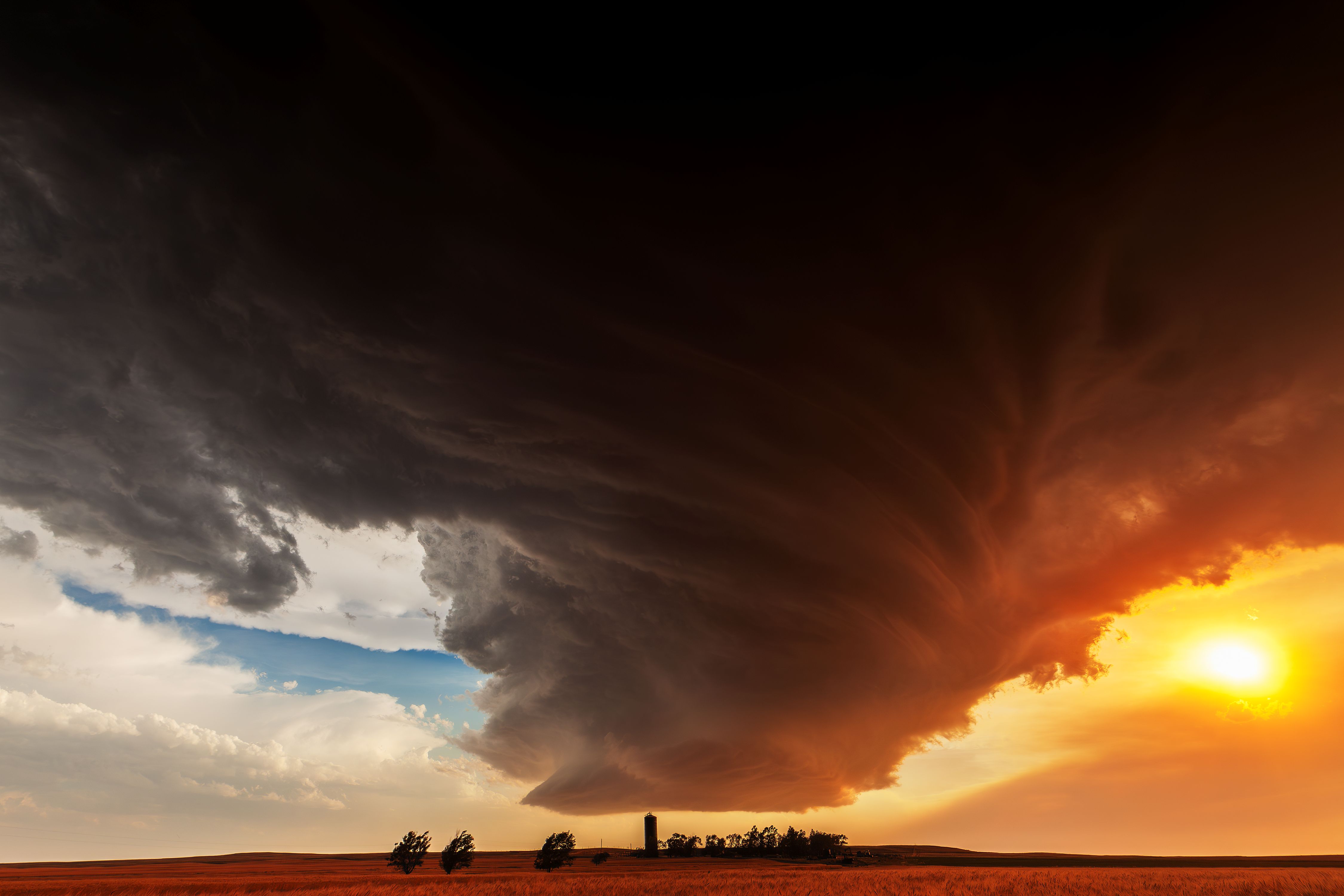
Seaman went chasing a type of thunderstorm called a supercell, which can produce grapefruit-sized hail and spectacular tornadoes. Their clouds can be up to 80 kilometres wide and 20,000 metres high, blocking out the daylight, creating a dark, ominous space beneath.

Seaman was not prepared for how overwhelming the experience could be – the smells of the charged particles, the sweetness of the grass and the pavement before it rains, the colours of the clouds and the light of the sky and the lightning

It was important to remember the pain and destruction these storms inflicted on local people, never knowing when a tornado could come through. But Seaman’s images speak to the duality of all things – there is no creation without destruction, a cloud can be beautiful, terrible, or both. There is no art more dramatic than that created by nature.

Biography |
Seaman has held numerous group and solo exhibitions, and her series The Last Iceberg has been shown extensively in the United States and Europe, including at the National Academy of Sciences, Washington, D.C. (2007 and 2008); the University of Delaware Museum (2008); and Hans Alf Gallery, Copenhagen (2009).

Seaman’s work has received numerous prizes including a National Geographic award in 2006 and a Critical Mass award in Portland, Oregon, for her monograph The Last Iceberg in 2007. She was a TED Senior Fellow (2011–15) and a Stanford Knight Fellow (2014) and was awarded a Fellowship by Cinereach in New York as Filmmaker in Residence (2016).

Seaman’s photographs have been published widely, including in National Geographic, German GEO, Italian GEO, The New York Times Sunday Magazine, Newsweek, Outside Magazine (United States), Zeit Wissen (Germany) and Men’s Journal (United States).
Camille Seaman

Born Huntington, New York, 1969
Lives Ølgod, Denmark

The Big Cloud, 2008–14
Seaman went chasing a type of thunderstorm called a supercell, which can produce grapefruit-sized hail and spectacular tornadoes. Their clouds can be up to 80 kilometres wide and 20,000 metres high, blocking out the daylight, creating a dark, ominous space beneath.

Seaman was not prepared for how overwhelming the experience could be – the smells of the charged particles, the sweetness of the grass and the pavement before it rains, the colours of the clouds and the light of the sky and the lightning

It was important to remember the pain and destruction these storms inflicted on local people, never knowing when a tornado could come through. But Seaman’s images speak to the duality of all things – there is no creation without destruction, a cloud can be beautiful, terrible, or both. There is no art more dramatic than that created by nature.

Biography |
Seaman has held numerous group and solo exhibitions, and her series The Last Iceberg has been shown extensively in the United States and Europe, including at the National Academy of Sciences, Washington, D.C. (2007 and 2008); the University of Delaware Museum (2008); and Hans Alf Gallery, Copenhagen (2009).

Seaman’s work has received numerous prizes including a National Geographic award in 2006 and a Critical Mass award in Portland, Oregon, for her monograph The Last Iceberg in 2007. She was a TED Senior Fellow (2011–15) and a Stanford Knight Fellow (2014) and was awarded a Fellowship by Cinereach in New York as Filmmaker in Residence (2016).

Seaman’s photographs have been published widely, including in National Geographic, German GEO, Italian GEO, The New York Times Sunday Magazine, Newsweek, Outside Magazine (United States), Zeit Wissen (Germany) and Men’s Journal (United States).
Laetitia Vançon

Born Toulouse, France, 1979
Lives Munich, Germany

Tribute to Odesa, 2022–23
The goal of the work was to portray Odesa, a city on the Black Sea of both strategic and symbolic importance.

Behind the frontlines, another storm was unfolding, more intimate, rooted in daily life, survival and quiet defiance. Odesa stood at a crossroads: between land and sea, past and future, peace and war.

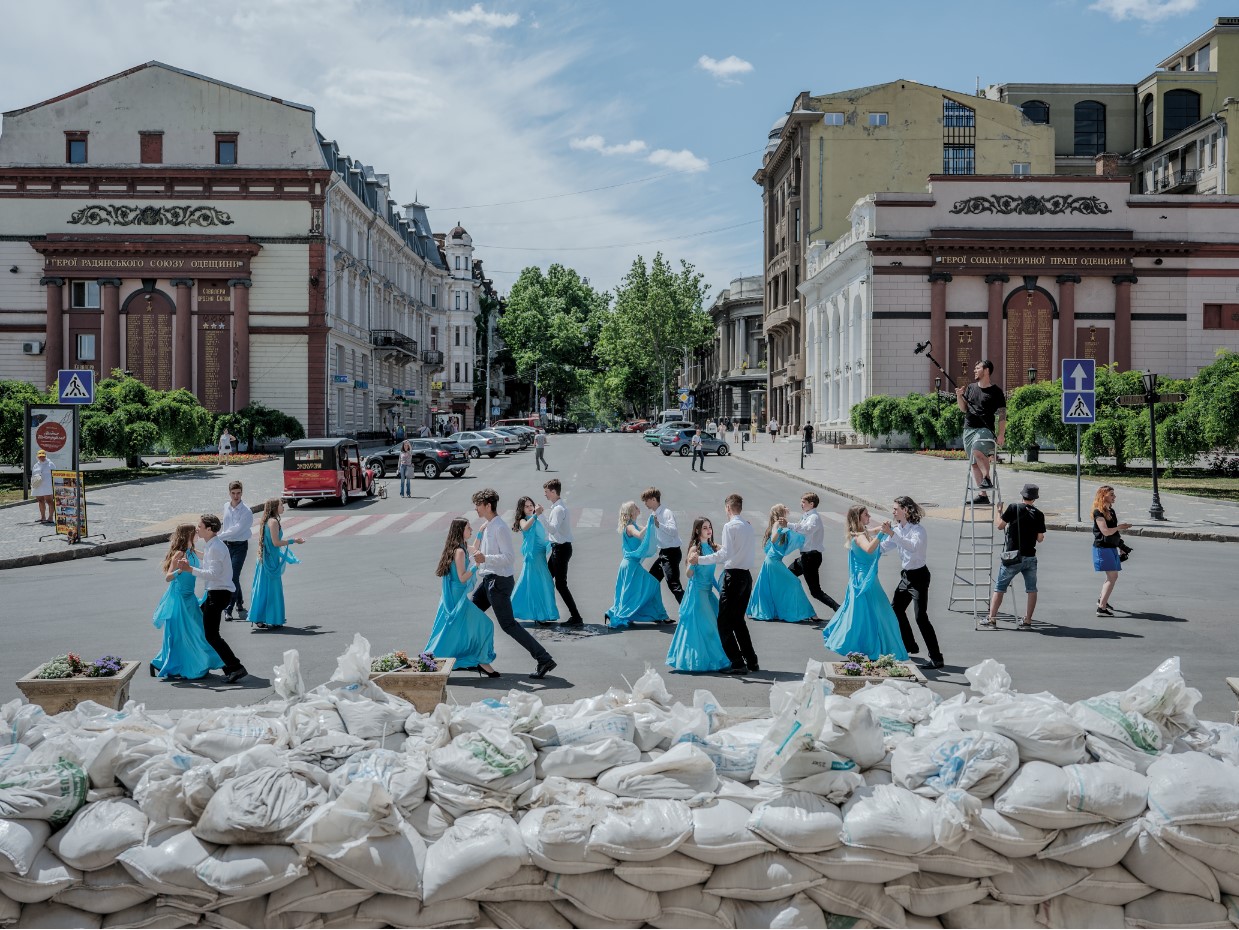
The war was everywhere, and in every story Vançon encountered. But so was life. She turned her lens towards this space of tension. The simplest gestures – swimming, performing arts, returning to school or church, volunteering – took on a quietly heroic dimension.

This work became a personal tribute to the people she encountered: those who stayed, who love, resist and carry on with courage and dignity. Even in the heart of the storm, hope, tenderness, solidarity and spirit endure.

Biography |
Since 2015, Vançon has been a regular contributor to The New York Times. Alongside her reporting, she developed At the End of the Day (2016–18), which documented the lives of young people in the Outer Hebrides, Scotland.

She has exhibited her work internationally, including at Les Rencontres d’Arles, France, with Fisheye Gallery (2018); La Gacilly-Baden Photo Festival, France and Austria (2019); Hunterian Museum, Glasgow (2019); Xposure Festival, Dubai (2023); Leica Gallery, Wetzlar, Germany (2023); and Festival della Fotografia Etica, Lodi, Italy (2024).

Vançon’s work in Odesa, Ukraine, won the Feature Photography prize from the Overseas Press Club of America in 2023. Her work has also been recognised by the Sony World Photography Awards (2019); Pictures of the Year International, United States (2020); Lucie Foundation, Los Angeles (2023); the Leica Oscar Barnack Award, Wetzlar, Germany (2023); Siena International Photo Awards, Italy (2023); and Life Framer, London (2024).
Laetitia Vançon

Born Toulouse, France, 1979
Lives Munich, Germany

Tribute to Odesa, 2022–23
The goal of the work was to portray Odesa, a city on the Black Sea of both strategic and symbolic importance.

Behind the frontlines, another storm was unfolding, more intimate, rooted in daily life, survival and quiet defiance. Odesa stood at a crossroads: between land and sea, past and future, peace and war.

The war was everywhere, and in every story Vançon encountered. But so was life. She turned her lens towards this space of tension. The simplest gestures – swimming, performing arts, returning to school or church, volunteering – took on a quietly heroic dimension.

This work became a personal tribute to the people she encountered: those who stayed, who love, resist and carry on with courage and dignity. Even in the heart of the storm, hope, tenderness, solidarity and spirit endure.

Biography |
Since 2015, Vançon has been a regular contributor to The New York Times. Alongside her reporting, she developed At the End of the Day (2016–18), which documented the lives of young people in the Outer Hebrides, Scotland.

She has exhibited her work internationally, including at Les Rencontres d’Arles, France, with Fisheye Gallery (2018); La Gacilly-Baden Photo Festival, France and Austria (2019); Hunterian Museum, Glasgow (2019); Xposure Festival, Dubai (2023); Leica Gallery, Wetzlar, Germany (2023); and Festival della Fotografia Etica, Lodi, Italy (2024).

Vançon’s work in Odesa, Ukraine, won the Feature Photography prize from the Overseas Press Club of America in 2023. Her work has also been recognised by the Sony World Photography Awards (2019); Pictures of the Year International, United States (2020); Lucie Foundation, Los Angeles (2023); the Leica Oscar Barnack Award, Wetzlar, Germany (2023); Siena International Photo Awards, Italy (2023); and Life Framer, London (2024).
Patrizia Zelano

Born Brescia, Italy, 1964
Lives Verucchio, Italy

Acqua Alta a Venezia (High Water in Venice), 2019
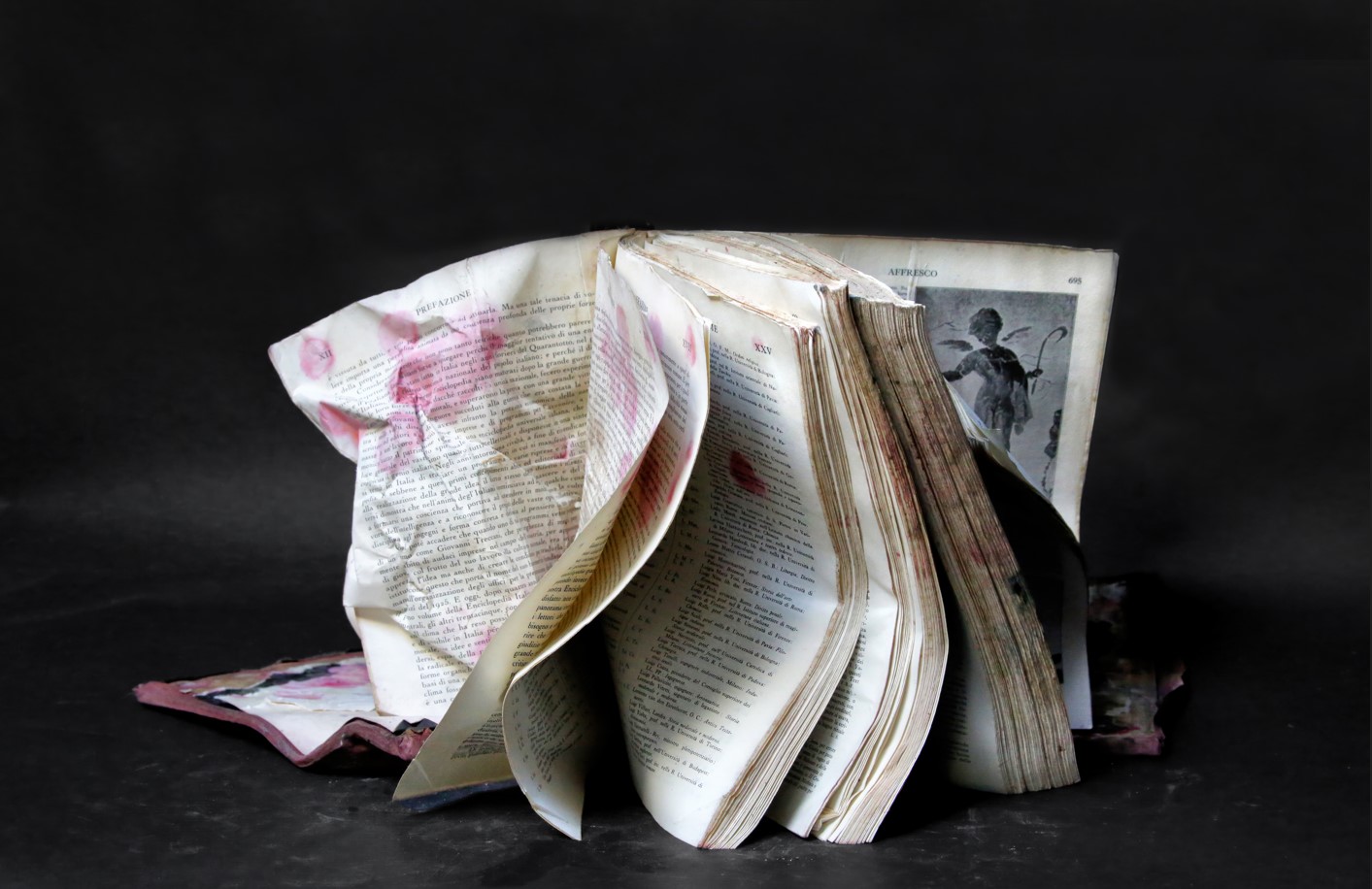
On the stormy night of 13 November 2019, Venice was submerged by one of the highest tides ever recorded, transforming the city into a wounded lagoon. That catastrophic storm inspired a project in which artistic gesture and existential urgency became one. Books that Zelano rescued from the f lood – encyclopedias, scientific treatises, literary texts – became, for her, the core of an investigation into the boundary between dissolution and resistance.

For Zelano, saving books has become a gesture aimed at restoring the evocative power of knowledge. Each photograph is like a collective memento mori that urges us to reconsider our relationship with the Earth, with culture, and with fragility itself. The photographed volumes emerge as ephemeral sculptures, lit only by natural light. The symbolic subject is transformed into regeneration, reconstructing fragments of meaning amidst the chaos of the present.

Biography |
Zelano’s work has been exhibited widely in solo and group exhibitions, including at Galleria dell’Immagine, Rimini (2007); Centro Italiano della Fotografia d’Autore, Bibbiena, Italy (2010); L’Arsenal de Metz, France (2011); Boca Raton Museum of Art, Florida (2012); National Museum of Contemporary Art (EMST), Athens (2013); IPP (International Photo Project), Spazio Soderini, Milan (2015); and CIBUS, Parma, Italy (2022).

Zelano has won numerous awards, including first prizes at SI Fest, Savignano sul Rubicone, Italy (2006 and 2009) and Festival di Fotografia di Napoli, Archivio Fotografico Parisio, Naples (2009). She has also won the Wannabee Prize International Art Contest (2014) and the Fondo Malerba award (2015), both in Milan.

She is the author of Soul Trigger: A Perceptual Oracle with 79 New Arcana – A Journey with Art and Magic, published by Pazzini editore in 2019.
Patrizia Zelano

Born Brescia, Italy, 1964
Lives Verucchio, Italy

Acqua Alta a Venezia (High Water in Venice), 2019
On the stormy night of 13 November 2019, Venice was submerged by one of the highest tides ever recorded, transforming the city into a wounded lagoon. That catastrophic storm inspired a project in which artistic gesture and existential urgency became one. Books that Zelano rescued from the f lood – encyclopedias, scientific treatises, literary texts – became, for her, the core of an investigation into the boundary between dissolution and resistance.

For Zelano, saving books has become a gesture aimed at restoring the evocative power of knowledge. Each photograph is like a collective memento mori that urges us to reconsider our relationship with the Earth, with culture, and with fragility itself. The photographed volumes emerge as ephemeral sculptures, lit only by natural light. The symbolic subject is transformed into regeneration, reconstructing fragments of meaning amidst the chaos of the present.

Biography |
Zelano’s work has been exhibited widely in solo and group exhibitions, including at Galleria dell’Immagine, Rimini (2007); Centro Italiano della Fotografia d’Autore, Bibbiena, Italy (2010); L’Arsenal de Metz, France (2011); Boca Raton Museum of Art, Florida (2012); National Museum of Contemporary Art (EMST), Athens (2013); IPP (International Photo Project), Spazio Soderini, Milan (2015); and CIBUS, Parma, Italy (2022).

Zelano has won numerous awards, including first prizes at SI Fest, Savignano sul Rubicone, Italy (2006 and 2009) and Festival di Fotografia di Napoli, Archivio Fotografico Parisio, Naples (2009). She has also won the Wannabee Prize International Art Contest (2014) and the Fondo Malerba award (2015), both in Milan.

She is the author of Soul Trigger: A Perceptual Oracle with 79 New Arcana – A Journey with Art and Magic, published by Pazzini editore in 2019.


Produced by∣Candlestar

Many thanks to UP Gallery, the consultant for this project, for their participation and great support.


Produced by∣Candlestar

Many thanks to UP Gallery, the consultant for this project, for their participation and great support.
Works
成果作品 - Takashi Arai

A Maquette for a Multiple Monument for the  
Hiroshima Peace Memorial (Genbaku Dome) 2014.
Courtesy the artist, Hiroshi Gotō and ANOMALY, Tokyo
成果作品 - Marina Caneve

Val di Zoldo: Destruction #02 
2018
成果作品 - Tom Fecht

LUCIFER’S VORTEX (Luciferine #2433) 
2020.
Courtesy the artist and Laffanour | Galerie Downtown, Paris
成果作品 - Balazs Gardi
1.46 pm, January 6, 2021, Washington, D.C.   
2021
成果作品 - Roberto Huarcaya

Amazograma #1 (Detail) 
2014.
Courtesy the artist and Rolf Art, Buenos Aires
成果作品 - Alfredo Jaar

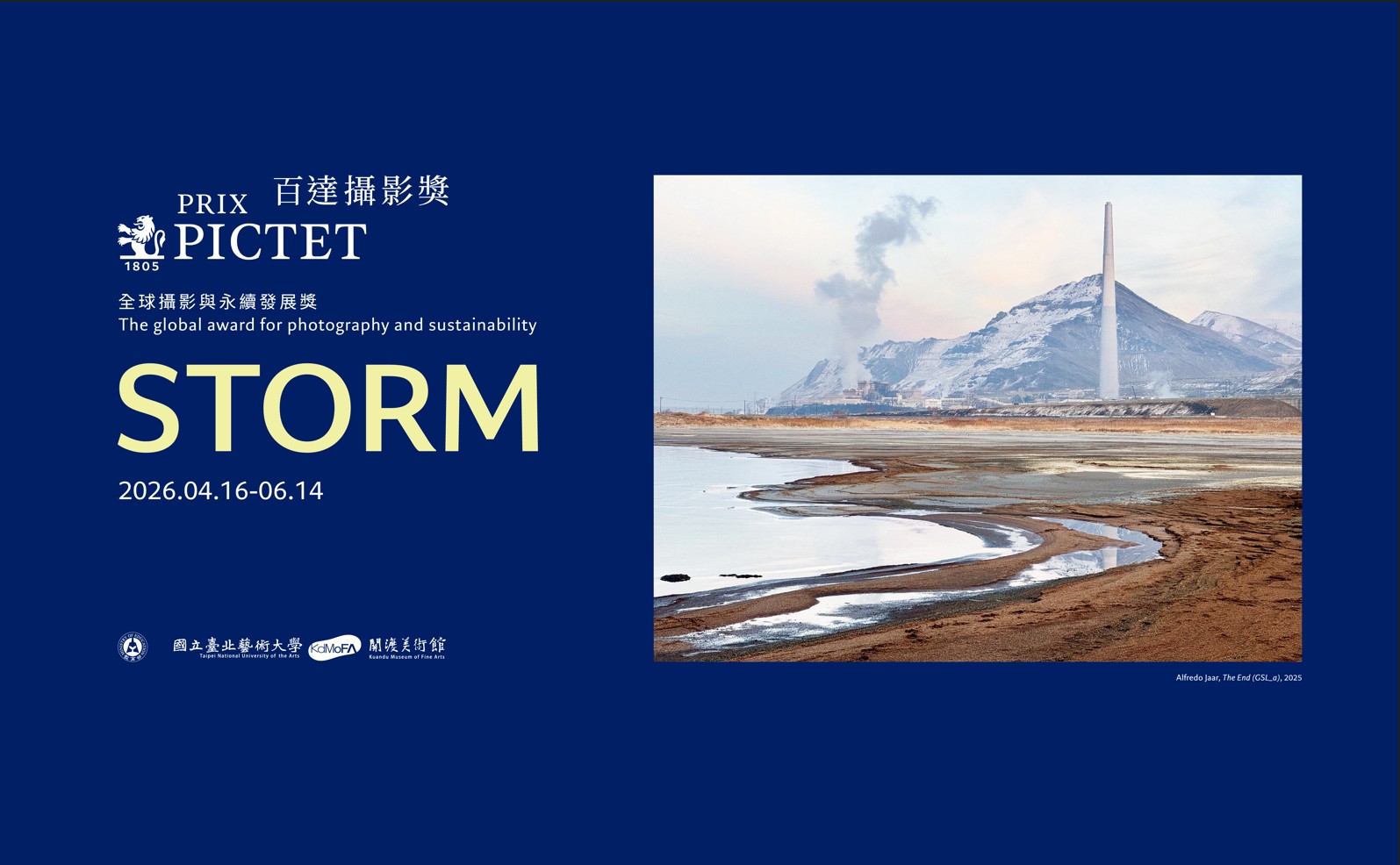
The End (GSL_a)  
2025
成果作品 - Belal Khaled

Untitled 
2023
成果作品 - Hannah Modigh

Boy and Cherry Picker Truck   
2012
成果作品 - Baudouin Mouanda
Chez la marchande de légumes (At the Vegetable Seller’s)   
2020
成果作品 - Camille Seaman

The Lovely Monster over the Farm, 19.15 CST, 
Lodgepole, Nebraska, 22 June 2012 
2012
成果作品 - Laetitia Vançon

Keep Dancing to the Beat of Your Heart     
2022
成果作品 - Patrizia Zelano

Acqua Alta a Venezia #24
2019.
Courtesy the artist and Zamagni Galleria d